As the third and final season of “Squid Game” landed on Netflix on June 27, the series not only shattered streaming records—it also reinforced its position as a cultural force for South Korea. In just three days, Season 3 drew over 60 million views and topped charts across all 93 countries where Netflix operates. That makes it the platform’s most successful launch to date.
While reviews for the final chapter have sparked debate, the numbers speak for themselves. The global reach of “Squid Game” has turned what began as a daring drama into a powerful symbol of Korea’s storytelling excellence. However, what made Season 3 even more notable was the celebration back home.
A Massive Farewell Parade
South Korea gave “Squid Game” a sendoff unlike any other. In Seoul, fans took over major roads for a full-scale parade dedicated to the series. The spectacle included floats shaped like characters from the show and a marching band. Most striking was a line of guards in pink uniforms, carrying neon-lit replicas of the show’s signature coffins.
Actors dressed as contestants followed behind, performing over-the-top reactions as if just realizing the game’s deadly rules. It was part tribute, part street theater—and entirely unique. Crowds gathered along the route, capturing a moment where fiction and real-life admiration collided.
Creator Reflects on a Journey Fueled by Pressure

During the fan event, creator Hwang Dong-hyuk addressed the emotional weight behind ending the series. He shared, “I poured everything into this. So yes, there’s sadness—but it also feels like a burden has finally lifted.”
That burden wasn’t only creative. Hwang struggled for over a decade to sell the idea. When Netflix finally picked it up in 2019, the offer barely covered his living expenses. He received no ownership rights over the franchise. The process, especially the intense pressure during production, took a physical toll—Hwang reportedly lost teeth due to stress during the filming of the first season.
Still, the payoff was massive. “Squid Game” became the most-watched series on Netflix after its 2021 premiere. It opened the world’s eyes to the strength of Korean storytelling and turned its creator into a global name.
A Cultural Gateway for Global Audiences
Along with being entertaining, “Squid Game” contributed to the global popularity of Korean culture. From the viral dalgona candy challenge to the sudden demand for Korean snacks, the show introduced audiences to details once unfamiliar outside of Asia. Traditional foods, phrases, and visuals sparked interest in everything from Korean language classes to tourism.
The impact also boosted other Korean productions with international eyes now fixed on Korean content. Dramas like “The Glory” and movies like “Decision to Leave” gained broader traction. “Squid Game” didn’t just thrive—it made room for others to rise.
Raising Real Questions About Inequality
While the show delivered dramatic entertainment, it also struck a nerve. “Squid Game” highlighted harsh realities like debt and class struggles in South Korean society. Characters often faced impossible financial burdens. This hit close to home for many viewers, both in Korea and abroad.
President Lee Jae-myung commented on this cultural mirror, saying: “‘Squid Game’ exposes deep problems in our society. It’s not just about survival. It’s about how unfair the fight can be.”
By framing financial desperation within a brutal competition, the show sparked deeper conversations. Audiences began talking more openly about student debt, healthcare costs, and housing inequality—all framed through a gripping narrative.
Awards and Accolades Cement the Legacy
“Squid Game” didn’t just break records—it rewrote them. The hit show became the first non-English-language series to win three Screen Actors Guild awards and six Emmy Awards in 2022. The City of Los Angeles even named September 17 as “Squid Game Day” in recognition of its premiere.
These wins weren’t just symbolic. They marked a shift in how non-English content is perceived in mainstream media. Global stories now have a stronger seat at the table, thanks in large part to the path carved out by “Squid Game.”
Season 3 Finale Fuels Spin-off Buzz
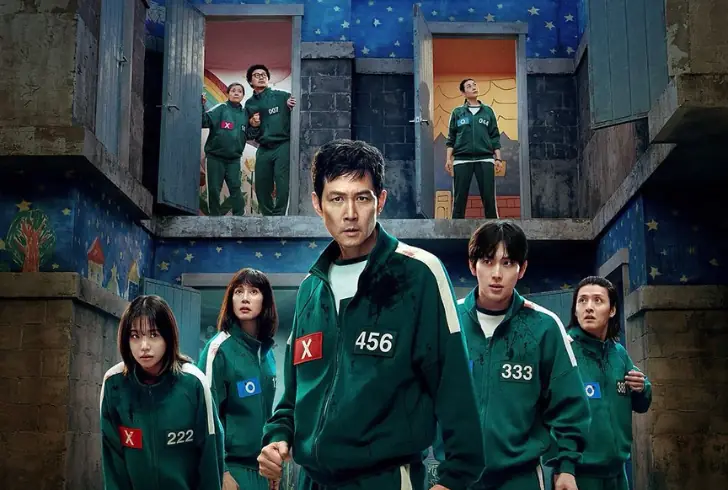
While Hwang has stated he’s done with the franchise, Season 3 sparked fresh speculation. The final episode features Cate Blanchett in a surprise cameo as a game recruiter. That unexpected moment led fans to speculate about a possible English-language spin-off.
Rumors point toward filmmaker David Fincher, known for “Fight Club” and “Gone Girl,” as a potential director. While nothing is confirmed, the idea of extending the universe into Hollywood has gained traction. With such a powerful brand already established, future adaptations seem likely.
However, Hwang disclosed that a more optimistic conclusion was part of his initial intention. But in the end, he decided to maintain a grounded tone.“In Season 3, I focused on how greed turns the world into a jungle,” he said in an interview. “People step on others just to climb higher.”
An Unmatched Cultural Legacy That Continues to Grow
From Seoul’s packed streets to Hollywood’s award stages, “Squid Game” has become more than a series. It represents a shift in global entertainment. It raised questions, sparked movements, and opened doors for voices previously unheard.
While Season 3 may close the main storyline, the impact isn’t fading. From cultural exports to political debate, the show continues to influence. That kind of legacy doesn’t end—it evolves.
The game may be over, but the ripple effect of “Squid Game” is just beginning. Its story carved a global mark, opening space for deeper conversations and bigger dreams. Watch this space—its next chapter might already be in motion.